1) Where The Idea Comes From and TradeMarks
The idea, execution etc was developed by Swami Satyananda Saraswati, a disciple of Sivananda and the man behind the Bihar School of Yoga in India as well as all of those wonderful books that have the same design and only differ in colors. It came to him while he was keeping night guard at an ashram during the hours at which children would wake up and chant Sanskrit slokas.
Later on he was presented with such chants and he seemed to remember them but did not know from where. Another Swami told him that it was because his "subtle body" had been listening to them, possibly while in a state of just falling asleep (he would fall asleep at around 3 and the boys started chanting at 4).
He even trademarked the term Stayananda Yoga Nidra
2) Unsuspected Users Throughout History
Satyananda tells us that many geniuses in history used the state between sleep and being awake, or conscious relaxation to access knowledge beyond that of any other human being. For example, you may have heard of Einstein's ritual of taking a nap with something in his hand and sleeping only until the object that was in his hand would fall to the floor. Then wake up refreshed and continue on.

Or, that of Napoleon which Satyananda recalls in his book: Yoga Nidra, and I am paraphrasing: "In the middle of battle Napoleon would delegate power to his second in command and retire to his tent for exactly 20 minutes where he would fall into a deep state of sleep that could be identified by his loud snoring, then exactly 20 minutes after that he would come out refreshed and with new ideas".
"Many if not all, of the truly creative discoveries in life, such as those of science, art, music and religion, were made during creative 'flashes' of intuition which we can understand as occurring when the inherent knowledge of the unconscious surfaces into consciousness" Satyananda Saraswati
3) Benefits
Satyananda links Yoga Nidra with Patanjali's prathyahara (sixth limb of yoga or sense withdrawal) and says it can help with it. But on the subject of Patanjali he links it to Yoga Sutra 1:38 in particular "The mind can be maid steady by giving it knwledge of dream and sleep for support) : "We need to understand the nature of the dream state in order to fully comprehend the use of visualization in Yoga Nidra".
The practice of Yoga Nidra, says Satyananda helps in memory training, the awakening of creativity, releasing of old samskaras (old conditioning reactions to situations), and attaining access to creative solutions to present problems: "The deeper layers of the mind contain the solutions to all our problems, but we have to be able to allow them to manifest while maintaining complete detachment"
4) Choosing a Statement to Be Manifested In Your Life
The practice is very structured and long. It requires that someone will guide you through some very specific forms of relaxation that includes having a pre-determined "sankalpa" or short and specific statement that you want to have manifested. For example:
"I am healthy and well"
"My creativity guides me in finding the best possible solution"
"I am being guided to the best business idea for the highest good of all concerned"
Note that these are some I came up with myself. His actual suggestions were more along the lines of "I will awaken my spiritual potential" or "I will be successful in all that I undertake". Now, forgive me for taking issue with someone of the height of Satyananda, but as I come to see that everything that happens to me happens only in the now I prefer to use the present tense for declarations, statements or sankalpas... but that could be just me.
5) The Practice Itself
You would probably need a recording or someone to read through it:
a) Relaxing in a room at right temperature and moderate light in corpse pose
b) After being relaxed one makes the statement (from point 4) clearly and repeats it 3 times in a strong way and internally
c) Rotation of consciousness where an instructor would mention different parts of the body in a rather rapid succession and you need to visualize them quickly (goes something like this: Right hand thumb, second finger, third finger, fourth finger, fifth finger, palm of the hand, back of the hand, wrist, lower arm, elbow, upper arm, shoulder, armpit, right waist, right hip, right thigh, kneecap, calf muscle, ankle, heel, sole of the right foot, top of the right foot, big toe, second toe, third toe, fourth toe, fifth toe...etc). Then it goes to the left side, then it goes to the upper body and head.
d) This is repeated up to three times with reminders "do not fall asleep", although it is OK if someone does.
c)Breathing: focusing on the navel, chest, throat and nostrils it suggests 27 counts of concentration on the breathing counting back from 27 to 1. If you loose a count you have to start back at 27.
d) Image visualization: The instructor will name things and you will be an observer of the things that happen to you as you visualize them (i.e.: old conditionings may appear, you may feel happy or sad). Some of the things mentioned in one of the proposed exercises included: burning candle, Egyptian temple at sunrise, coffin beside a grave, torrential rain, full moon, Buddha smiling, etc.
e) Resolve: repeat the statement from b again
d) finish relaxation
e) Hari Om Tat Sat is the mantra utilized to finish a session.
----
The book contains variations on the practice (including shorter versions) and goes deep into explanations. Styananda includes some research done, including color pictures of brain scans on the tests done of people before and after practicing Yoga Nidra.
The most surprising thing for me is to see the art of visualization, one that I am pretty fond of ever since reading "Creative Visualization" by Shakti Gwain before I knew anything about yoga.
On the other hand Yoga Nidra seems to border between being a science focused on helping us heal and access our deeper intelligence and a shortcut to superpowers or even Samadhi. Nothing wrong with that!
Satyananda seems to have recorded a CD with the practice himself but it is not currently available through Amazon.
The idea, execution etc was developed by Swami Satyananda Saraswati, a disciple of Sivananda and the man behind the Bihar School of Yoga in India as well as all of those wonderful books that have the same design and only differ in colors. It came to him while he was keeping night guard at an ashram during the hours at which children would wake up and chant Sanskrit slokas.
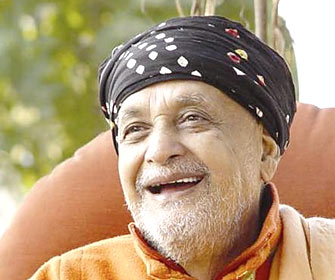 |
| Swami Satyananda Saraswati |
He even trademarked the term Stayananda Yoga Nidra
2) Unsuspected Users Throughout History
Satyananda tells us that many geniuses in history used the state between sleep and being awake, or conscious relaxation to access knowledge beyond that of any other human being. For example, you may have heard of Einstein's ritual of taking a nap with something in his hand and sleeping only until the object that was in his hand would fall to the floor. Then wake up refreshed and continue on.
Or, that of Napoleon which Satyananda recalls in his book: Yoga Nidra, and I am paraphrasing: "In the middle of battle Napoleon would delegate power to his second in command and retire to his tent for exactly 20 minutes where he would fall into a deep state of sleep that could be identified by his loud snoring, then exactly 20 minutes after that he would come out refreshed and with new ideas".
"Many if not all, of the truly creative discoveries in life, such as those of science, art, music and religion, were made during creative 'flashes' of intuition which we can understand as occurring when the inherent knowledge of the unconscious surfaces into consciousness" Satyananda Saraswati
3) Benefits
Satyananda links Yoga Nidra with Patanjali's prathyahara (sixth limb of yoga or sense withdrawal) and says it can help with it. But on the subject of Patanjali he links it to Yoga Sutra 1:38 in particular "The mind can be maid steady by giving it knwledge of dream and sleep for support) : "We need to understand the nature of the dream state in order to fully comprehend the use of visualization in Yoga Nidra".
The practice of Yoga Nidra, says Satyananda helps in memory training, the awakening of creativity, releasing of old samskaras (old conditioning reactions to situations), and attaining access to creative solutions to present problems: "The deeper layers of the mind contain the solutions to all our problems, but we have to be able to allow them to manifest while maintaining complete detachment"
4) Choosing a Statement to Be Manifested In Your Life
The practice is very structured and long. It requires that someone will guide you through some very specific forms of relaxation that includes having a pre-determined "sankalpa" or short and specific statement that you want to have manifested. For example:
"I am healthy and well"
"My creativity guides me in finding the best possible solution"
"I am being guided to the best business idea for the highest good of all concerned"
Note that these are some I came up with myself. His actual suggestions were more along the lines of "I will awaken my spiritual potential" or "I will be successful in all that I undertake". Now, forgive me for taking issue with someone of the height of Satyananda, but as I come to see that everything that happens to me happens only in the now I prefer to use the present tense for declarations, statements or sankalpas... but that could be just me.
5) The Practice Itself
You would probably need a recording or someone to read through it:
a) Relaxing in a room at right temperature and moderate light in corpse pose
b) After being relaxed one makes the statement (from point 4) clearly and repeats it 3 times in a strong way and internally
c) Rotation of consciousness where an instructor would mention different parts of the body in a rather rapid succession and you need to visualize them quickly (goes something like this: Right hand thumb, second finger, third finger, fourth finger, fifth finger, palm of the hand, back of the hand, wrist, lower arm, elbow, upper arm, shoulder, armpit, right waist, right hip, right thigh, kneecap, calf muscle, ankle, heel, sole of the right foot, top of the right foot, big toe, second toe, third toe, fourth toe, fifth toe...etc). Then it goes to the left side, then it goes to the upper body and head.
d) This is repeated up to three times with reminders "do not fall asleep", although it is OK if someone does.
c)Breathing: focusing on the navel, chest, throat and nostrils it suggests 27 counts of concentration on the breathing counting back from 27 to 1. If you loose a count you have to start back at 27.
d) Image visualization: The instructor will name things and you will be an observer of the things that happen to you as you visualize them (i.e.: old conditionings may appear, you may feel happy or sad). Some of the things mentioned in one of the proposed exercises included: burning candle, Egyptian temple at sunrise, coffin beside a grave, torrential rain, full moon, Buddha smiling, etc.
e) Resolve: repeat the statement from b again
d) finish relaxation
e) Hari Om Tat Sat is the mantra utilized to finish a session.
----
The book contains variations on the practice (including shorter versions) and goes deep into explanations. Styananda includes some research done, including color pictures of brain scans on the tests done of people before and after practicing Yoga Nidra.
The most surprising thing for me is to see the art of visualization, one that I am pretty fond of ever since reading "Creative Visualization" by Shakti Gwain before I knew anything about yoga.
On the other hand Yoga Nidra seems to border between being a science focused on helping us heal and access our deeper intelligence and a shortcut to superpowers or even Samadhi. Nothing wrong with that!
Satyananda seems to have recorded a CD with the practice himself but it is not currently available through Amazon.
Claudia, Swami Satchinanda of Integral Yoga fame and also a disciple of Sivananda has a great Yoga Nidra CD!
ReplyDeleteThanks for letting me know Anon!
DeleteJust finished up "The Mind at Night", an overview of dream/sleep research, sort of pop science book, published in 2004 (so, maybe a decade old research). Lots of studies reported in there that support your #3, benefits, for dreaming. Funny to find a yoga dreaming book reviewed at the same time I'm reading that, ancient meets modern. *trundles off to amazon to score a copy*
ReplyDeleteMaya that is very interesting... and yes quite a coincidence! :-)
Deletetotally unrelated comment, on james's blog, but you accept anonymous comments and james's blog requires an email. I am not yet up to supplying name/email in response to blogs so here goes. On his valentine's day blog he talked about his daughter's braces. Please note that braces don't have to hurt so much and shouldn't. Dr Alan Sosnay in nyc never hurt my kids and he's an artist. So you see james can help his daughter. There must be others (orthodontists) who are more careful and more gentle too. It's ok if you decide not to publish this and just pass along the information.
ReplyDeleteWonderful; thanks for highlighting some, before now, unknown facts about the practice! Really enjoying your blog.
ReplyDeletehttp://aurorarises.blogspot.com/2012/02/thanks-polar-bear.html?spref=fb
exact that 5! see at this for more information http://theserenitypath.net
ReplyDelete