When TKV Desikachar was a kid he refused to do asanas (yoga poses) so Krishnamacharya tied him up in the lotus position for a while, with ropes: "and left me for a while to think about it". The kind of thing a yogi does to his child.
I was taken back by the book, left breathless at points. It is not everyday you get such a presence in the account of the life of Krishnamacharya as it is here, seen by his son, and written with full presence and dare I say, from a state of yoga.
Here are things that did not know/surprised me:
Defying Our Common Knowledge
Let me ask you, and by you I mean you who are reading this: What is the one organ within the human body on which all others depend? Tell me. Did you answer the "heart" by any chance? I did.
"To give you just one example: It is axiomatic Western physiology that the heart pumps blood that enables other organs to perform their function.... In Krishnamahcaryas system, the lungs are the pump that makes the heart work. It defies all we know"
Game changer how Krishnamacharya saw the center of the body. No wonder his emphasis was so much in pranayama (breathing extension, breathing slowly, counting lifetimes in amount of breaths rather than years)
Kundalini
Kundalini is understood as the serpent power coiled at the base of our spine which we need to awaken, right?

To Krishnamacharya kundalini was "a blockage -the nucleus of imbalance in the body. Through proper practice, it was released to permit the flow of prana". I am not quite sure I understand what he means. But it is a different view.
Vinyasa
Not only does Krishnamacharya have the unique vision of vinyasa as being the effort that accompanies asana through the breathing, which is how he interprets Yoga Sutra 2.47 (unlike ALL other teachers), he goes further in the eyes of his son:
"My father's students were often amazed that he would greet them at the gate when they arrived, conduct the lessons, and then escort them back to the gate and bid them farewell. It is a practice that I continue. Often a student considers it a somewhat elaborate courtesy, but it is actually vinyasa... Vinyasa grants both teacher and student a sense of completion that is also a preparation for the next phase of or life".
Vegetarianism
"Nowhere in the Vedas or in the ancient teachings is it said that you must be a strict vegetarian. Westerners, in particular, seem to believe that to seriously study Yoga it is imperative. This is not the case, and for some individuals may even be unhealthy. That my family has a vegetarian diet is matter of preference, but we live in a hot, tropical climate that produces a great abundance of fruits grains and vegetables"
There is mention of two students
The first student mentioned is his brother in law (B.K.S. Iyengar). The second is:
"The student whom my father did not want to teach was an american woman... Indra Devi. Then as now, she is an individual of remarkable imagination energy and purpose... She was determined to study with Krishnamacharya.... He was equally determined that she would not.But she was a friend of the Maharaja..."
No third? No fourth? No fifth? and by this I mean Jois, Mohan, Ramaswami? Strange. No mention. I suppose these are the ones that caused the bigger impression on Desikachar, or that yogis are people too.
To Be a Teacher
There is a chapter called that, "to be a teacher".
Krishnamacharya's students were terrified of him during the palace years (they would not sit if riding in the same train car), he "mellowed" says Desikachar, once in Chennai.
I won't say much about this chapter. It is a personal read. There is one thing that came up during the book though that caught my attention and I consider important from a teacher perspective. Desikachar tells a story of visiting one of his students who was forcing his own students to a rigid schedule of 3 AM practice, in a northern, cold weather.
He feels for the students, and disagrees, as Krishnamacharya would.
We must teach according to the student's capabilities, environment, condition, role in life, stage of life. This is the message of Desikachar. He repeats it again and again. Message received! And understood. Yes.
Krishnamacharya's Death:
"Four months after his one-hundredth birthday celebration Krishamacharya began slipping away. I ws with him as much as possible; he continued to teach. Four hours before he feel into his final comma he was reading and marking up a Buddhist commentary that he wanted me to read... I was with him when he released his final breath. That was all there was. He passed easily from life. When we moved him from the bed, we found under his pillows bank notes worth about five thousand rupees. No one had known the money was there.... It was Krishnamacharya's final act of independence"
He did however oppose India's independence from British rule and Gandhi's movement in life.
The Yoga Sutras as Desikachar Learned them:
Having been through the Yoga Sutras course with Ramaswami it is very interesting to see Desikachar's learnings. He goes over all chapters in a general overview. A fantastic read. For example:
On That Difficult to obtain chapter one
It almost feels as if you are listening to Eckart Tolle. Chapter one is not that difficult. It is about coming into the now, it is about becoming "transparent" to whatever comes our way (in Tolle's words)
For Krishnamacharya: "Yoga is a gradual progression toward pure perception, unlimited in scope.... His [one who attains the state of yoga] knowledge is no longer based on memory or inference. It is spontaneous and at both a level and an intensity that is beyond the ordinary... Finally, the mind reaches a state where it has no impressions of any sort. It is open, clear, transparent."

"... asanas are needed to open the nadis (nerves); pranayama is what brings prana (aliveness, life force) into contact with apana, or dirt, and so removes impurities. T he dual effect is a progressive increase of inner prana and with it the development of mental tranquility and clarity, the closer engagement of mind and purusha" (the observer, what is, the I AM)"
For chapter two and three
The task is to achieve a constant ability to distinguish between the Perceiver and what is perceived. How? through the eight limbs. Through practice and mastery of them.
Chapter four
"The semantics of which are within the grasp of only those who have experienced it."
Note to self: re-read chapter 4, where is that blue book?
----
And yet, as difficult as that chapter one is to obtain, it is all contained in the now, in this very moment, in how alive we are, in remembering we are breathing, in eliminating linear time and coming to this very instant, this very moment.
RELATED:
WHERE OH WHERE DOES PATANJALI MENTION ANYTHING ABOUT VINYASA?
8 KRISHNAMACHARYA STORIES THROUGH THE EYES OF ONE OF HIS STUDENTS
I was taken back by the book, left breathless at points. It is not everyday you get such a presence in the account of the life of Krishnamacharya as it is here, seen by his son, and written with full presence and dare I say, from a state of yoga.
Here are things that did not know/surprised me:
Defying Our Common Knowledge
Let me ask you, and by you I mean you who are reading this: What is the one organ within the human body on which all others depend? Tell me. Did you answer the "heart" by any chance? I did.
"To give you just one example: It is axiomatic Western physiology that the heart pumps blood that enables other organs to perform their function.... In Krishnamahcaryas system, the lungs are the pump that makes the heart work. It defies all we know"
 |
| I thought so too |
Kundalini
Kundalini is understood as the serpent power coiled at the base of our spine which we need to awaken, right?
To Krishnamacharya kundalini was "a blockage -the nucleus of imbalance in the body. Through proper practice, it was released to permit the flow of prana". I am not quite sure I understand what he means. But it is a different view.
Vinyasa
Not only does Krishnamacharya have the unique vision of vinyasa as being the effort that accompanies asana through the breathing, which is how he interprets Yoga Sutra 2.47 (unlike ALL other teachers), he goes further in the eyes of his son:
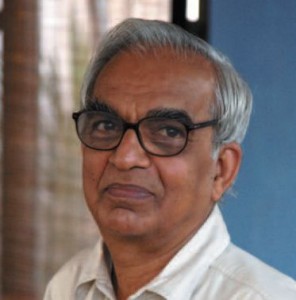 |
| Desikachar, Krishnamacharya's Son |
Vegetarianism
"Nowhere in the Vedas or in the ancient teachings is it said that you must be a strict vegetarian. Westerners, in particular, seem to believe that to seriously study Yoga it is imperative. This is not the case, and for some individuals may even be unhealthy. That my family has a vegetarian diet is matter of preference, but we live in a hot, tropical climate that produces a great abundance of fruits grains and vegetables"
There is mention of two students
The first student mentioned is his brother in law (B.K.S. Iyengar). The second is:
"The student whom my father did not want to teach was an american woman... Indra Devi. Then as now, she is an individual of remarkable imagination energy and purpose... She was determined to study with Krishnamacharya.... He was equally determined that she would not.But she was a friend of the Maharaja..."
No third? No fourth? No fifth? and by this I mean Jois, Mohan, Ramaswami? Strange. No mention. I suppose these are the ones that caused the bigger impression on Desikachar, or that yogis are people too.
To Be a Teacher
There is a chapter called that, "to be a teacher".
Krishnamacharya's students were terrified of him during the palace years (they would not sit if riding in the same train car), he "mellowed" says Desikachar, once in Chennai.
I won't say much about this chapter. It is a personal read. There is one thing that came up during the book though that caught my attention and I consider important from a teacher perspective. Desikachar tells a story of visiting one of his students who was forcing his own students to a rigid schedule of 3 AM practice, in a northern, cold weather.
He feels for the students, and disagrees, as Krishnamacharya would.
We must teach according to the student's capabilities, environment, condition, role in life, stage of life. This is the message of Desikachar. He repeats it again and again. Message received! And understood. Yes.
I learn here that it is OK to follow my instincts in what the body needs now, in this weather, in this climate, considering how I grew up, what I have available, what the customs and vegetation is around me. The NOW becomes more and more important. Of course that does not anyone off the discipline hook, it is just done with intelligence.
Krishnamacharya's Death:
"Four months after his one-hundredth birthday celebration Krishamacharya began slipping away. I ws with him as much as possible; he continued to teach. Four hours before he feel into his final comma he was reading and marking up a Buddhist commentary that he wanted me to read... I was with him when he released his final breath. That was all there was. He passed easily from life. When we moved him from the bed, we found under his pillows bank notes worth about five thousand rupees. No one had known the money was there.... It was Krishnamacharya's final act of independence"
He did however oppose India's independence from British rule and Gandhi's movement in life.
The Yoga Sutras as Desikachar Learned them:
Having been through the Yoga Sutras course with Ramaswami it is very interesting to see Desikachar's learnings. He goes over all chapters in a general overview. A fantastic read. For example:
On That Difficult to obtain chapter one
It almost feels as if you are listening to Eckart Tolle. Chapter one is not that difficult. It is about coming into the now, it is about becoming "transparent" to whatever comes our way (in Tolle's words)
For Krishnamacharya: "Yoga is a gradual progression toward pure perception, unlimited in scope.... His [one who attains the state of yoga] knowledge is no longer based on memory or inference. It is spontaneous and at both a level and an intensity that is beyond the ordinary... Finally, the mind reaches a state where it has no impressions of any sort. It is open, clear, transparent."
"... asanas are needed to open the nadis (nerves); pranayama is what brings prana (aliveness, life force) into contact with apana, or dirt, and so removes impurities. T he dual effect is a progressive increase of inner prana and with it the development of mental tranquility and clarity, the closer engagement of mind and purusha" (the observer, what is, the I AM)"
For chapter two and three
The task is to achieve a constant ability to distinguish between the Perceiver and what is perceived. How? through the eight limbs. Through practice and mastery of them.
Chapter four
"The semantics of which are within the grasp of only those who have experienced it."
Note to self: re-read chapter 4, where is that blue book?
----
And yet, as difficult as that chapter one is to obtain, it is all contained in the now, in this very moment, in how alive we are, in remembering we are breathing, in eliminating linear time and coming to this very instant, this very moment.
RELATED:
WHERE OH WHERE DOES PATANJALI MENTION ANYTHING ABOUT VINYASA?
8 KRISHNAMACHARYA STORIES THROUGH THE EYES OF ONE OF HIS STUDENTS
http://yogamindmedicine.blogspot.com/
ReplyDeletenew blog from our loving east village ashtanga teacher.
Thanks for the link, glad to see that Guy now has a blog separately from his website, will add to the roll :-)
DeleteThank you for this review, Claudia. I plan on reading this tonight if it's available on Kindle.
ReplyDeleteHi Lu, yes it is on kindle, that is how I read it. Very very powerful read! enjoy
DeleteSo you liked it Claudia, I put off getting it because I was so disappointed with kausthub's Yoga of the Yogi. You've convinced me though, have just ordered it.
ReplyDeleteHey, you've read 'First there is a mountain' right by Elizabeth Kadetsky? Reading it now, heard there was something interesting about the 1938 movie. If you haven't read it yet, order it right away , this minute, you'll love it and will no doubt read it in a night, worth the secondhand price for the description of Iyengar's Library alone.
Hi Grimmly, I am not very fond of Kausthub's direction either, but this book is from 2000 and it is fully Desikachar, and you can feel it, powerful read, I think you will like it. The thing about the lungs has me still going... it changes the whole game, paradigm switch!
DeleteAbout First There Was a Mountain, yes I read it in 2007, from the NY Public Library, I remember it being her story about visiting the Iyengar family and all the things she noticed... I dont remember the part of Iyengar's Library, wonder if it is in kindle...
By the way, at your recommendation I got the book you mentioned, cant quite remember the name now, which is one of the recommended in the Makarandam by Krishnaahcarya, very interesting, will be writing about that one soon too!
nice summary review. i will buy this tonight on amazon. thanks!
ReplyDeleteEnjoy!
ReplyDeletei think, i need to read this book. thank you for sharing.
ReplyDelete:-)
DeleteConsidering kundalini, I heard the same concept in more detail in the Yoga matrix of Richard Freeman.
ReplyDelete